When a metal part does not work — because it is too heavy, too conductive, or cannot withstand the chemical or thermal environment — engineers turn to high-performance polymers. PEEK, PEI (Ultem) and POM (Delrin/acetal) are three of the most CNC-machined engineering plastics, but they serve very different roles. This guide explains when to use each.
PEEK
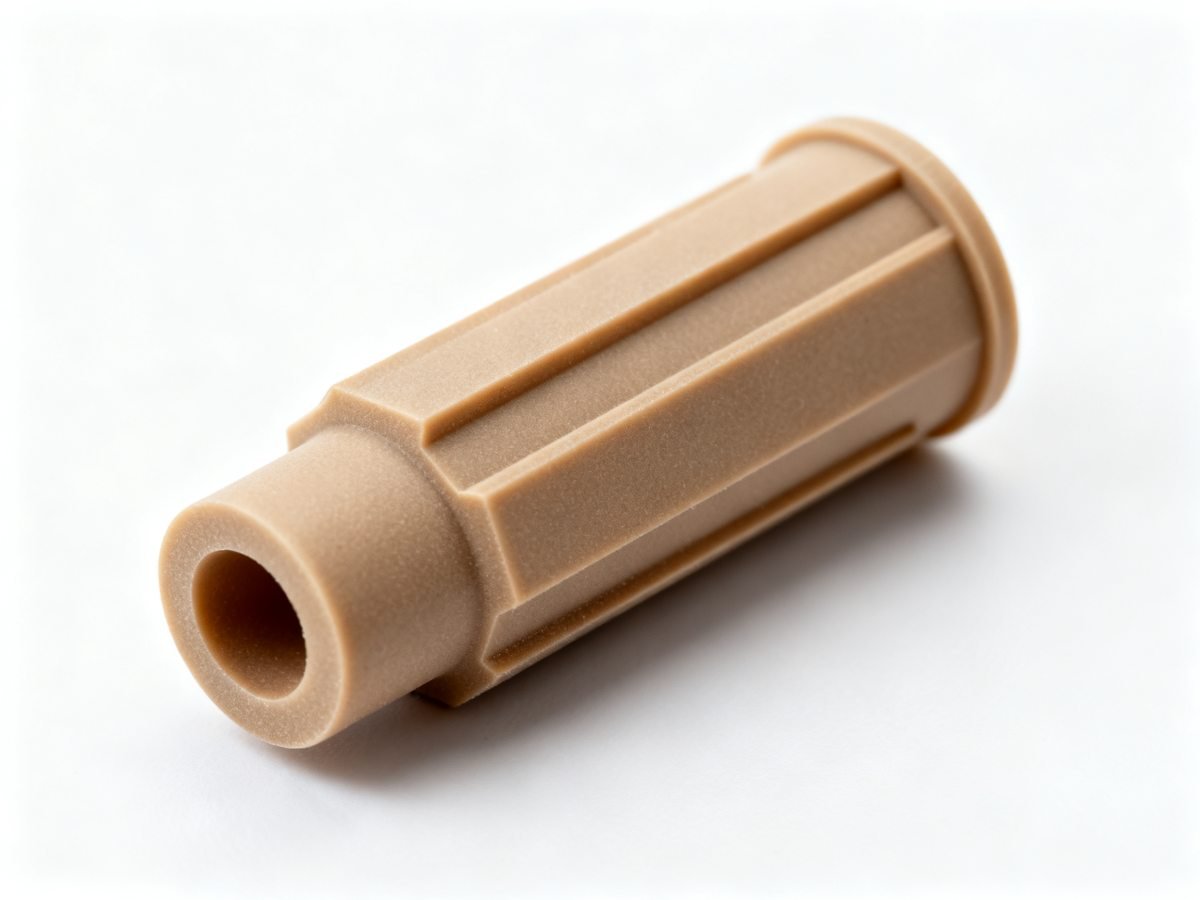
PEEK (polyether ether ketone) is a high-temperature, high-strength thermoplastic with outstanding chemical resistance, excellent mechanical performance and good wear and fatigue properties. It can work continuously at elevated temperatures and can be sterilised, which makes it a favourite for medical, semiconductor, aerospace and demanding industrial parts. It is the most expensive of the three, so it is chosen where its performance is genuinely needed.
PEI (Ultem)
PEI (polyetherimide), best known as Ultem, is a transparent amber polymer with excellent electrical insulation, flame and smoke performance and good strength at lower cost than PEEK. It is widely used for electrical insulators, test sockets, fixtures, semiconductor and electronics components. It is stiff and dimensionally stable, but less tough and more notch-sensitive than PEEK.
POM (Delrin/acetal)
POM (polyoxymethylene), commonly Delrin or acetal, is the workhorse for mechanical parts: gears, bearings, bushings, rollers, spacers and sliding components. It has low friction, good wear resistance, excellent dimensional stability and is easy to machine to tight tolerances. It is far cheaper than PEEK or PEI, but its temperature and chemical limits are lower, and it is not suitable for very high-temperature or flame-rated applications.
How they compare
- Maximum service temperature: PEEK is highest, then PEI, then POM.
- Mechanical strength and toughness: PEEK leads overall; PEI is stiff but more brittle; POM is strong and tough enough for everyday mechanics.
- Electrical insulation: PEI and PEEK are excellent; PEI is the classic low-cost insulator.
- Wear and friction: POM is the default for moving, sliding and gearing parts.
- Chemical and hydrolysis resistance: PEEK is the most resistant; POM can be affected by strong acids and hot water.
- Sterilisation / medical: PEEK is the preferred choice for repeated sterilisation.
- Cost: PEEK is highest, PEI moderate, POM lowest.
Other polymers we routinely machine include nylon, PSU and PAI (Torlon) for high-temperature bearing applications. You can see examples in our engineering plastics product section.
How to choose
- Need high temperature, chemicals, sterilisation or the highest strength — choose PEEK.
- Need high-performance electrical insulation, flame resistance at a lower cost, or an amber transparent insulator — choose PEI (Ultem).
- Need gears, bearings, bushings or quiet sliding parts at the best value — choose POM (Delrin).
Polymer parts are stress- and temperature-sensitive, so we use sharp tooling, correct coolant and stable clamping to hold tight tolerances and avoid warping, and we can advise on grade and annealed stock. As with metals, we machine plastic parts to ±0.01 mm where the design allows and provide inspection reports.
Not sure which polymer your application needs? Tell us the operating temperature, loads, electrical and chemical requirements and we will recommend a grade during the free DFM review. Request a quote, or compare metal options in our aluminum vs stainless steel guide.