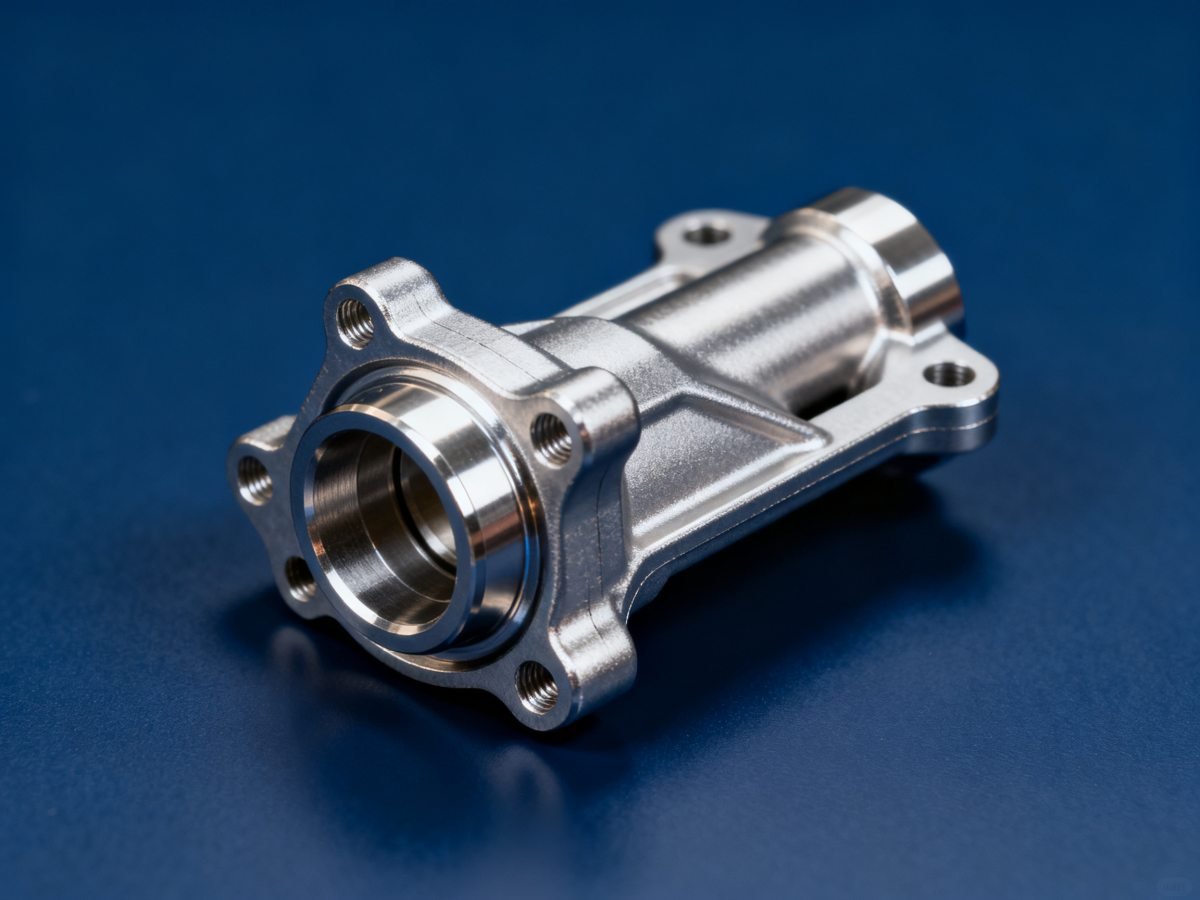
Two metals dominate custom CNC machining: aluminum (also written aluminium) and stainless steel. They are both widely available and easy to machine, but they solve different problems. Choosing correctly early affects weight, corrosion resistance, cost, lead time and surface finish. Here is a practical guide for engineers and buyers.
Aluminum alloys for CNC machining
Aluminum is lightweight (about one-third the density of steel), thermally conductive, easy to machine and naturally corrosion-resistant, and it takes anodising very well. The common grades are:
- 6061 — the general-purpose structural alloy: good strength, weldable, widely used for housings, plates, automation and robotics parts.
- 7075 — higher strength and hardness, used for high-load structural and aerospace-style parts; harder to anodise consistently.
- 6063 — excellent surface finish, often used for profiles and cosmetic architectural parts.
- 5083 — excellent marine corrosion resistance, common for large plates and welded structures.
Aluminum machines fast, which shortens cycle time and lowers cost. It is also the natural choice for large gantry-machined plates because it stays comparatively light even in large sections. Browse our aluminium machined parts and gantry plates.
Stainless steel alloys for CNC machining
Stainless steel is stronger, harder and far more resistant to corrosion and heat, but it is heavier and slower to machine. The most common grades are:
- 304 — the general-purpose austenitic stainless steel, used for brackets, shafts, housings and equipment exposed to moisture or cleaning.
- 316 — adds molybdenum for better resistance to chloride and salt environments; preferred for marine, chemical, food and medical equipment.
Stainless work-hardens and generates more cutting heat, so it needs sharp tooling, correct speeds and feeds and effective coolant. The payoff is a strong, durable part that can be electropolished, passivated or mirror polished for hygiene and corrosion resistance.
Side-by-side comparison
- Weight: aluminum is roughly one-third the weight of steel; choose it for weight-critical automation, robotics and moving parts.
- Strength and hardness: stainless is stronger and stiffer for high-load shafts and wear parts; 7075 aluminium closes the gap where weight matters.
- Corrosion: both resist corrosion, but 316 stainless is superior in salt, chemical and wash-down environments; anodised aluminum performs well in general service.
- Thermal conductivity: aluminum conducts heat far better, making it ideal for heat sinks and cold plates.
- Machinability and cost: aluminum cuts faster with less tool wear, so parts are generally cheaper and quicker; stainless has longer cycles and higher material cost.
- Finishing: aluminum anodises in many colours and textures; stainless is usually passivated, polished, brushed or electropolished.
When to choose aluminum
- Weight must be minimised (moving robot arms, automation frames, handheld or mobile equipment).
- You need heat dissipation (heat sinks, liquid cooling plates) or large, flat structural plates.
- You want coloured anodising or a low-cost, fast-turnaround prototype.
- Electromagnetic and electrical housings where light weight and finish matter.
When to choose stainless steel
- The part contacts food, chemicals, salt water or is repeatedly sterilised (medical, food, marine, pharma).
- High mechanical strength, wear resistance or fatigue life is critical (shafts, pins, fasteners, couplings).
- Operating temperatures are high or the environment is aggressive and anodising is not suitable.
If you are unsure, share the operating environment, load, weight limits and required finish and we will recommend a grade during our free DFM review. We machine both aluminum and stainless with tolerances down to ±0.01 mm and ISO 9001 quality control. Get a quote in 24 hours, or continue with our guide to anodising aluminum CNC parts.