Anodising is the most common surface finish for CNC machined aluminum (aluminium) parts. It hardens and protects the surface, enables a wide range of colours and improves wear and corrosion resistance. Because the process slightly changes dimensions and appearance, designers who understand it get better-looking, more functional parts the first time.
What is anodising?
Anodising is an electrolytic process that converts the aluminum surface into a controlled layer of aluminum oxide. The porous oxide is thicker and harder than the natural oxide film, can be dyed a colour, and is then sealed to lock in the dye and improve corrosion resistance. It is an integral part of the metal rather than a coating that peels, so it adheres extremely well.
Type II vs Type III hard anodising
- Type II (sulfuric acid anodising) is the standard decorative and protective finish, used for clear, black and dyed colours on consumer, electronics and automation parts.
- Type III (hard anodising, hardcoat) builds a much thicker, denser and harder layer for wear and abrasion resistance on moving parts, jigs and high-friction surfaces; it is typically dark grey or black and is less suited to bright colours.
- Chromic acid anodising gives a thin, corrosion-resistant film and is common in aerospace, but it is less often used for commercial CNC parts.
Colours, film thickness and wear
Type II commonly yields film thicknesses of roughly 5–25 µm, while Type III hard anodising is typically 25–100 µm. Clear, black, red, blue and other dyed colours are available; the final shade depends on the alloy, surface roughness and part geometry, so matched colour across large batches should be agreed in advance. A matte or satin pre-treatment (sandblasting or bead blasting) hides tool marks and gives a uniform, premium finish; brushing gives a directional look. Hard anodising adds measurable wear and electrical insulation resistance.
Design and tolerance tips
- Allow for dimensional growth. The film grows both into and out of the surface; roughly half the thickness builds outward. On tight holes, threads and mating features, leave room or machine to a pre-anodising size. We can hold critical features to a post-anodising tolerance.
- Mask threaded holes, precision bores and conductive surfaces where anodising must not reach, and call these out on the drawing.
- Avoid sharp internal corners and burrs; oxide build-up is uneven on sharp edges and can appear darker.
- Specify a finish standard and colour code (e.g. black Type II, satin) and note whether Ra is critical.
- Different alloys shade differently; keep the same grade on parts that must match.
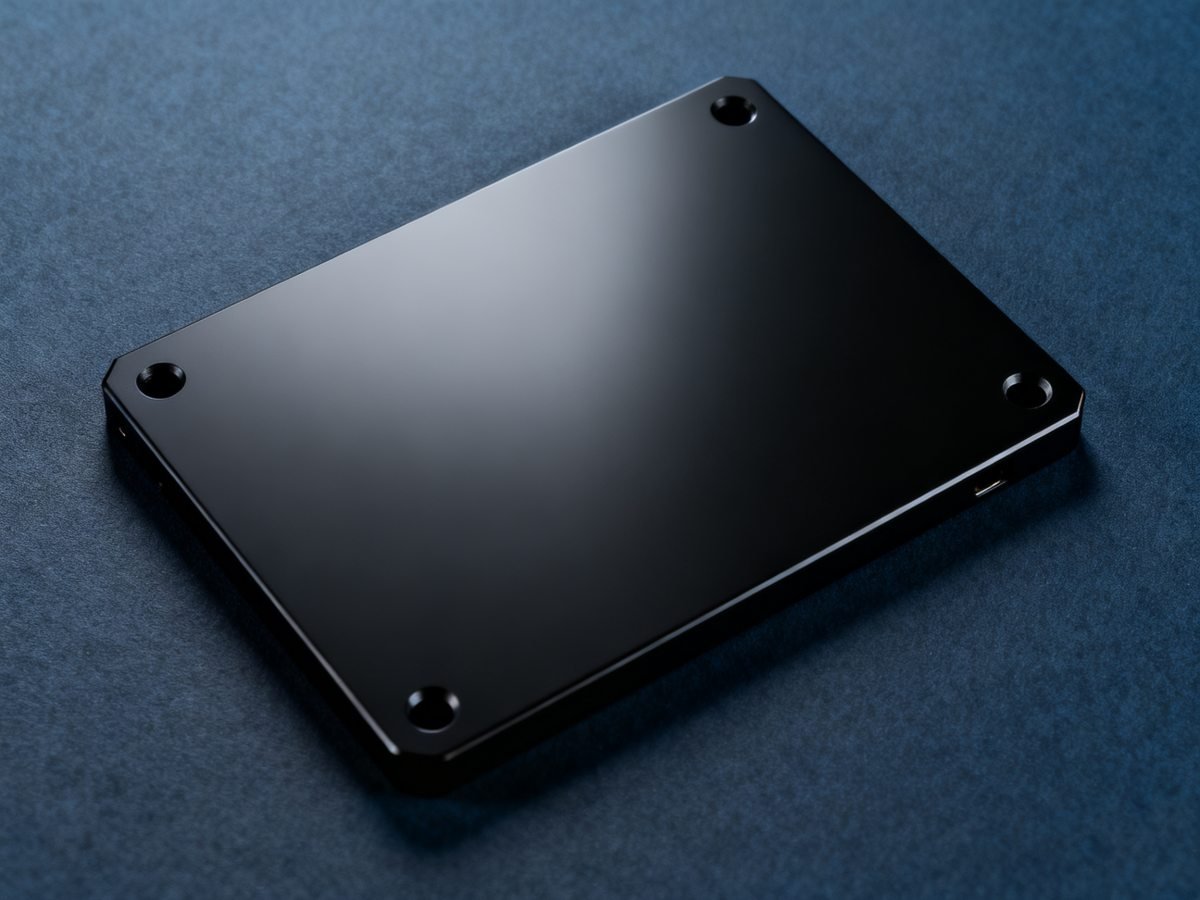
We provide multi-colour anodising, clear and black finishes, sand/bead blasting, brushing and hard anodising on milled and turned parts — see our anodised CNC parts for examples.
Other finishes for aluminum and steel
When anodising is not the right fit, we also offer powder coating, chromate conversion (chemical film), electroplating, and for stainless steel, passivation and electropolishing. Powder coating gives a tough, coloured polymer layer; passivation restores stainless steel's corrosion resistance without changing dimensions.
Tell us the desired appearance, wear resistance, corrosion environment and mating tolerances and we will recommend the right finish and adjust dimensions accordingly. Send your drawing for a quotation, or learn about machining engineering plastics such as PEEK and PEI.